How to take good pet photos: expert tips for cat and dog photoshoots
By Photobox on 4 August 2026
Discover expert tips to help you capture natural pet portraits, with advice on lighting, camera settings and more.

Taking good pet portraits can be difficult, but with the right advice, your camera roll will be full of better pet photos.
For this guide, we spoke to professional pet photographers Holly Dwyer and Wes Kristopher, as well as some of our team who know exactly what it’s like to take their own cat’s funny photos and silly dog pictures. From lighting and camera settings to action shots and attention tricks, here are their favourite tips for improving your pet photography.
How do you get the perfect pet portrait?
The best way to start taking better pet photos is to let your pet settle first. Familiar surroundings, short sessions and plenty of patience will almost always lead to more natural cat and dog photography than trying to rush them into position.
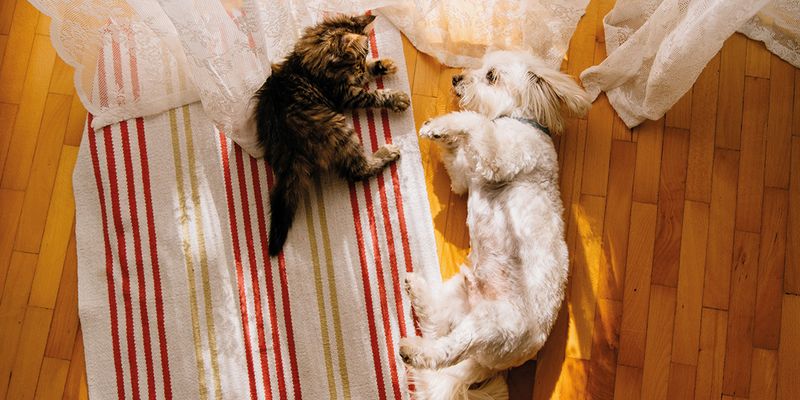
Dogs and cats usually need different approaches. Funny dog photos are often achieved with treats or toys, while cats – the queens that they are – tend to decide for themselves whether they’re in the mood for a photoshoot. The trick is to work at their pace, not yours.
Percy’s tip
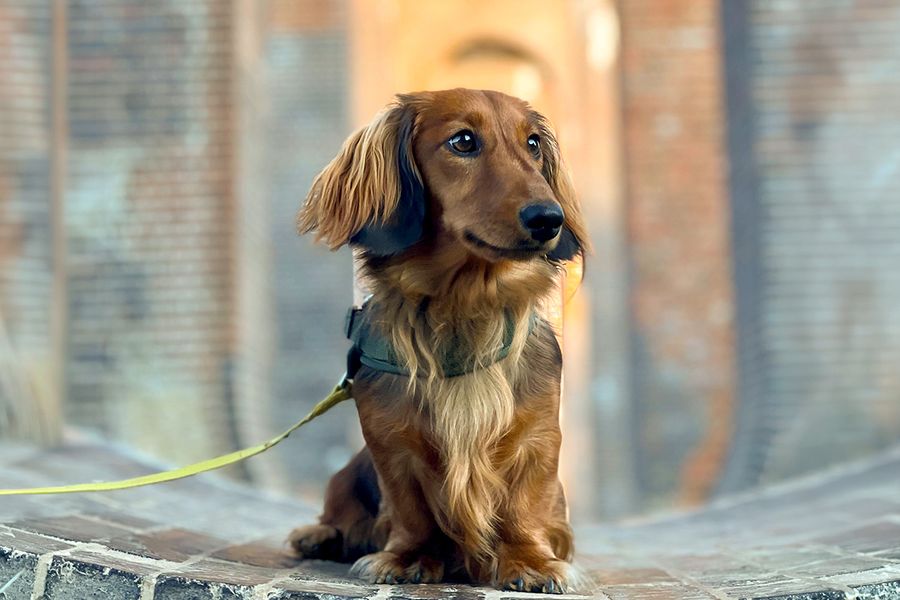
“Treats. Then more treats.” According to Percy (via his owner, Daniel, Paid Search Specialist), every successful portrait of a dog starts with snacks. It’s hard to argue with that.
Wes Kristopher’s Tips
Animal, wildlife and landscape photographer Wes Kristopher (@peopleofthepeak) is based in Sheffield, where he taught himself photography while exploring the Peak District National Park. His work is all about finding character in the natural world, making him the perfect person to ask how to capture more personality in your pet photoshoots.
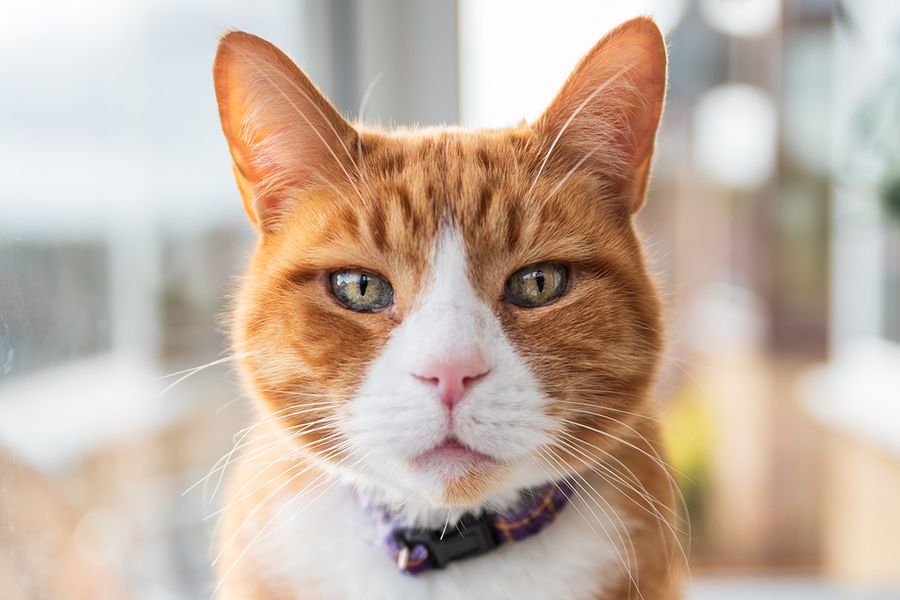
To improve your dog or cat photography, he says “My tip would be to get low down and eye level with your subject,” he says. “This perspective makes such a difference, filling the frame more and making your pet really dominant in the image.”
For even better results, Wes recommends using flowers, grasses or other foreground elements to add depth and naturally draw the eye to your pet.
What’s the best lighting for pet photos?
Natural light is usually the easiest place to start for the best dog photos or cat pictures.
- Go near a window or take your pet outside: Position your pet near a window, an open doorway, or outside on a bright but overcast day. Softer light reveals more texture in their coat, catches the light in their eyes, and avoids the harsh shadows that direct midday sun can create.
- If you’re indoors, switch off overhead lights where possible: Mixing natural and artificial light can create colour casts that are difficult to correct later.
Top tip: If you’re wondering how to take photos of black dogs or cats, a bright window with soft morning or evening light will help bring back texture and definition.
Kacchan’s tip
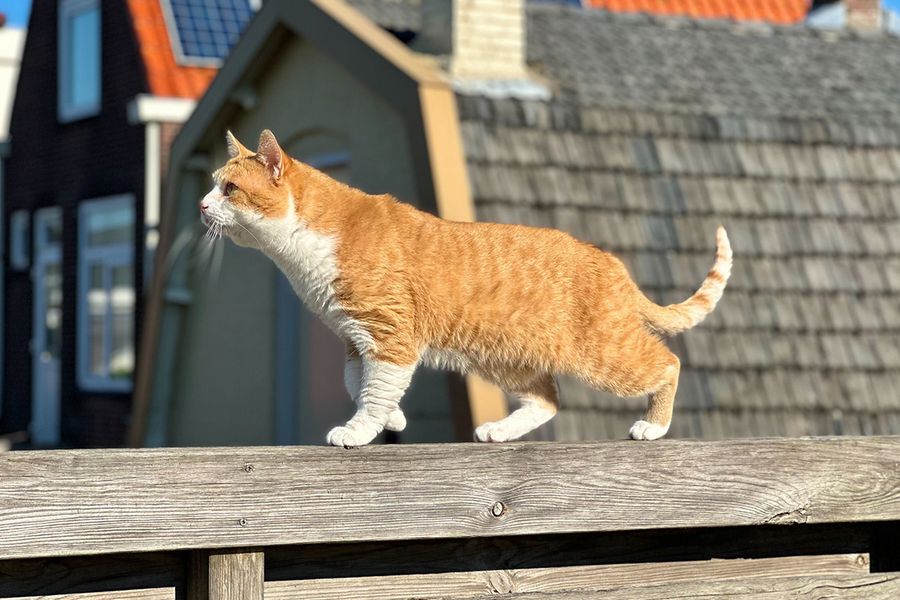
Ran, Performance Marketing Senior Specialist, says “Follow the sunlight. It’s the best colour grading nature provides.” She keeps things refreshingly simple when taking cat pictures, cute.
What are the best camera settings for perfect pet photos?
Switch to the highest available image quality, and turn off macro mode if your camera automatically switches lenses. Focusing on your pet’s eyes will also make your pet portraits feel sharper and more engaging. Capturing as much detail as possible makes for a great black and white cat or dog photo.
Patch’s tip:
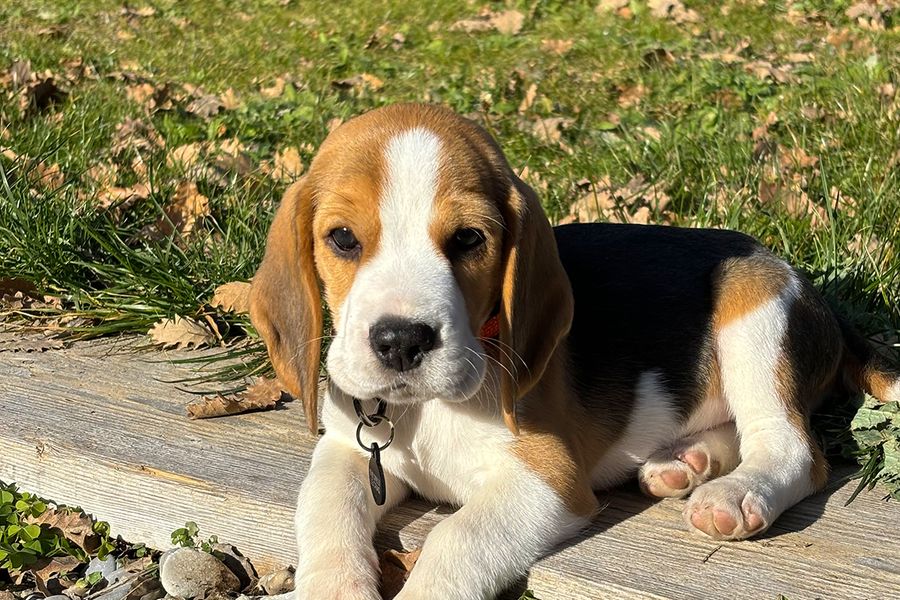
Camille, CRM Automation Specialist, always uses Live mode for her puppy photoshoots. “It lets me choose the best frame afterwards,” she says. “It’s a simple trick that can rescue the moment your dog blinked or looked away.”
Three cats, three times the experience
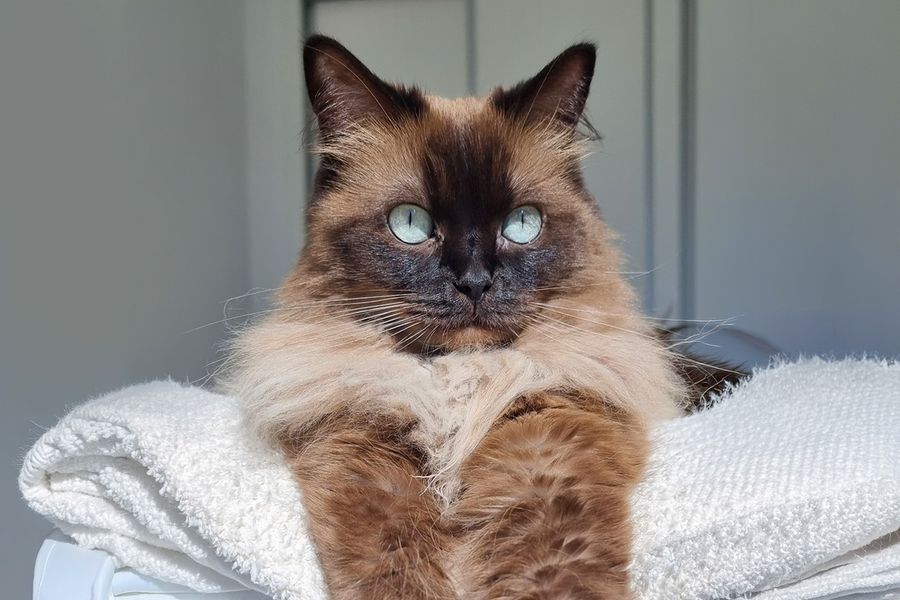
SEO Lead, Ivo, has picked up a few tricks from photographing his three cats, Bibi, Mila & Mikki. His best advice for a cat photoshoot that demands to be printed?
- Use toys: If you want your cat to look towards the camera, hold a toy or another object just behind your phone (just be prepared for the occasional swipe of a paw).
- Step back: Shoot from a little further away if you need to. It’s often better to crop later than miss the moment completely.
- Up the quality: If your phone allows it, switch to high resolution for extra detail – provided your cat sits still long enough.
- Snap away: Take more photos than you think you’ll need.
How to take photos of dogs catching treats?
Opt for burst mode. Instead of taking a single photo, burst mode captures a rapid sequence of images, giving you a much better chance of catching the perfect split second. Pair it with continuous autofocus and a fast shutter speed, and you’ll have a far better chance of freezing the action. You’re guaranteed to have a fun photo session with your dog, and achieve some funny animal photography.
How can I get my pet’s attention?
One of the easiest ways to improve your pet photos is to grab your pet’s attention just before you press the shutter. A squeaky toy, a rustling treat packet or a high-pitched noise can be enough to earn that curious head tilt or direct eye contact.
The key is to be ready first. Most pets only react for a split second before carrying on with whatever they were doing, so have your finger on the shutter before you make a sound.
Giorgio’s tip
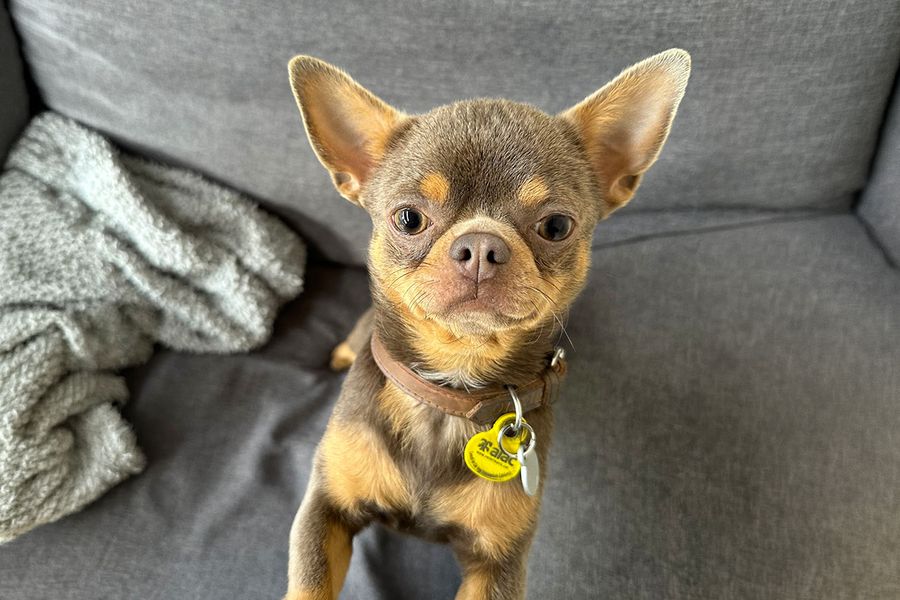
When photographing Giorgio, Maia, Senior Motion Designer, keeps it simple. “My trick is making high-pitched noises to grab his attention and get him to look at the camera.”
Holly Dwyer’s tips for photographing pets and people together
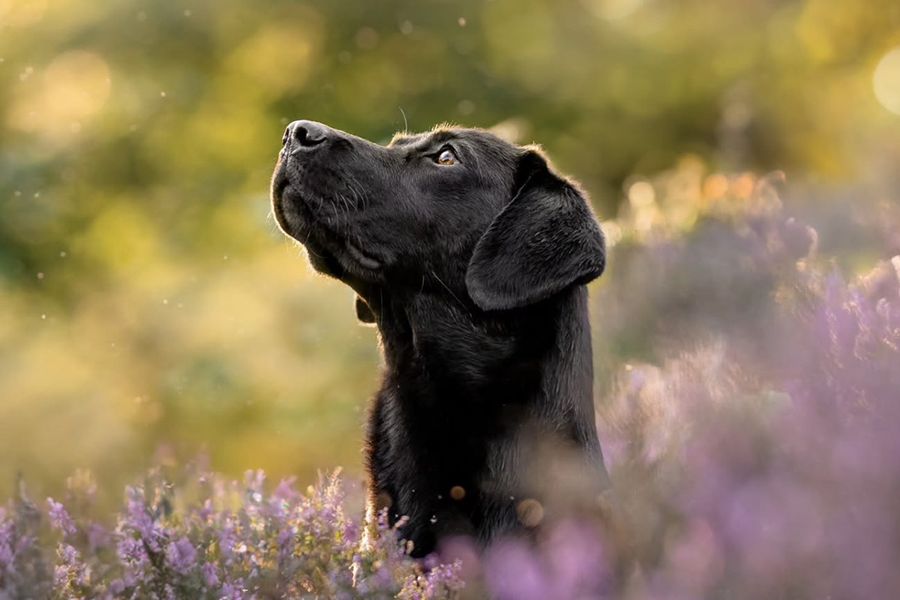
Some of the most meaningful pet portraits aren’t actually of the pet alone. Manchester-based pet and family photographer Holly Dwyer (@hollydwyerphotography) specialises in capturing the relationship between people and their pets, and her biggest piece of advice has very little to do with camera settings. Instead, it’s all about the connection.
For a family photoshoot with a dog or cat, the strongest photos aren’t usually the ones where everyone is looking at the camera. Capture moments when you’re looking at each other, sharing the same focus, or simply sitting close together.
As Holly explains, “A gap in between two subjects often breaks their ‘connection’ – so snuggle in tight, and really take that moment to be present with each other.” These make for lovely dog Christmas photos or Christmas cat pictures.
Try the ear blow
Need to grab your dog’s attention for just a second? Holly has a surprisingly simple trick. “Blow gently on the dog’s ear,” she says. “Be prepared for a sloppy dog snog. But for the occasional cute snap, it works a treat.”
The best part? The laughter that usually follows often makes an even better photo than the one you were trying to take. Photos like these deserve more than a place in your camera roll. Whether you turn them into a print, wall art or a photo book, they’re the moments you’ll come back to for years.
What are the most common pet photography mistakes?
The biggest mistake in pet photography is expecting your pet to behave like a professional model. Following a few golden rules for your photoshoot can make a real difference:
- Don’t drag the photoshoot out.
- Get down to their level.
- Make the most of natural light.
- Don’t be too quick to delete the outtakes.
The best pet pictures don’t tend to happen because everything went perfectly. They happen because your dog did something unmistakably them, or your cat finally looked up at exactly the right moment. A little patience, good light and a handful of expert tips can make all the difference.
Once you’ve found the photos you love, don’t let them disappear into your camera roll – make your pet photo into art. Create canvases, a set of prints, photo books and more to celebrate every muddy adventure, sleepy afternoon and wonderfully chaotic moment.
Because if there’s one thing every pet owner learns, it’s that the years somehow pass far more quickly than you expect.